|
Mineral Accretion / Coral Documentation
Wolf H. Hilbertz and Thomas J. Goreau
Images 11-20
Version: 1999/09/27
Image # 11 / 53
Image Name: Negril2_1.jpg
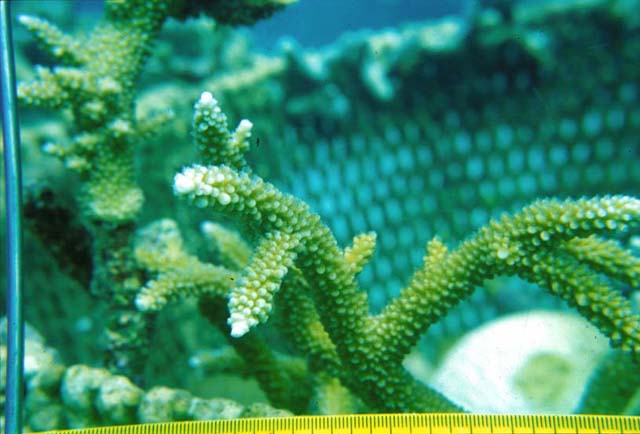
Negril, Jamaica. 1994. Staghorn corals growing on mineral accretion
artificial reef at rates about 5 times faster than normal.
Image # 12 / 55
Image Name: Negril4_1.jpg
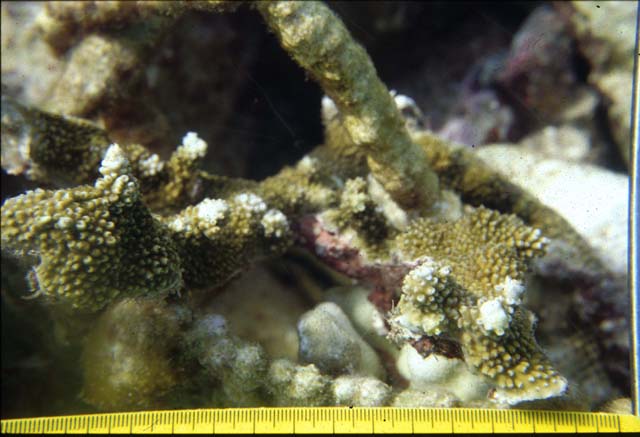
Negril, Jamaica. 1994. Staghorn corals on mineral accretion
Image # 13 / 54
Image Name: Negril3_1.jpg
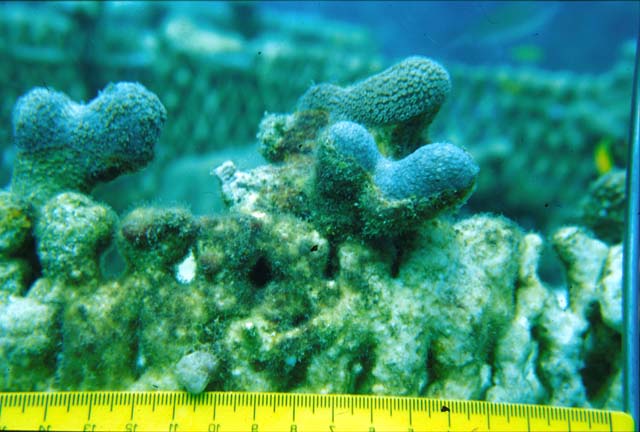
Negril, Jamaica. 1994. Finger corals on mineral accretion.
Image # 14 / 24
Image Name: Half_Moon1_1.jpg
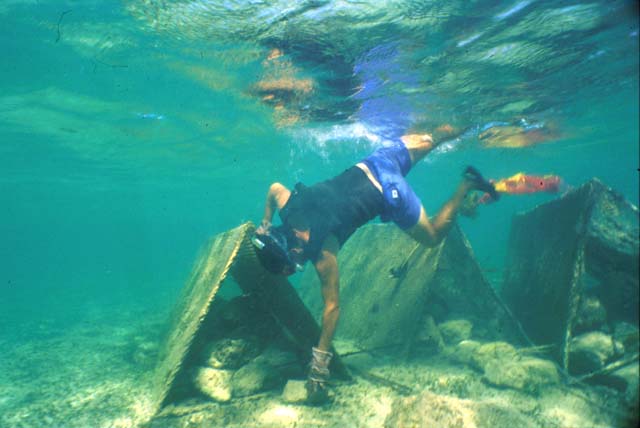
Montego Bay Jamaica. 1994. Three mineral accretion structures, with
rocks inside. These quickly became
occupied by fish and lobsters.
Image # 15 / 25
Image Name: Half_Moon2_1.jpg
15-25
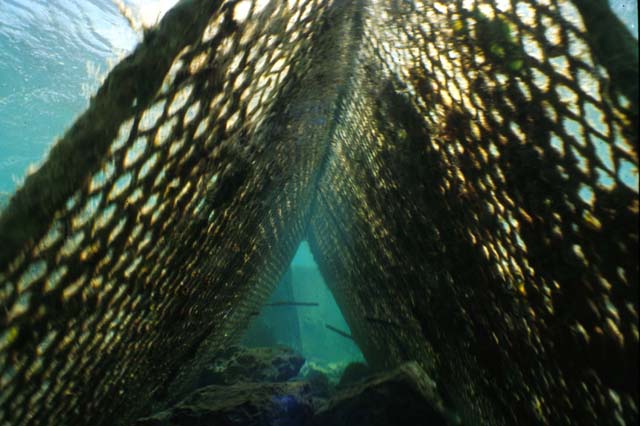
Montego Bay, Jamaica. 1994. Inside of one of the structures.
Image # 16 / 8
Image Name: Barnacle_3_April_1999jpeg_1.jpg
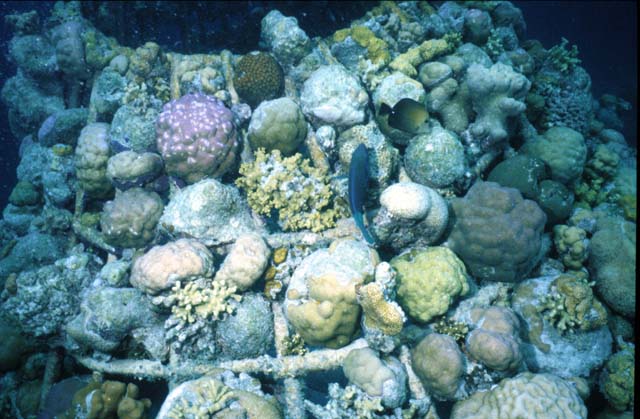
Ihuru Barnacle, Maldives. April 3 1999. Showing reef fish and head
corals which survived bleaching,
as well as branching corals which are growing very rapidly. The white
spots on the purple coral are due to
grazing by parrotfish focusing on this one coral but not biting the
rest.
Image # 17 / 7
Image Name: Barnacle_2_Apr_1999jpeg_1.jpg
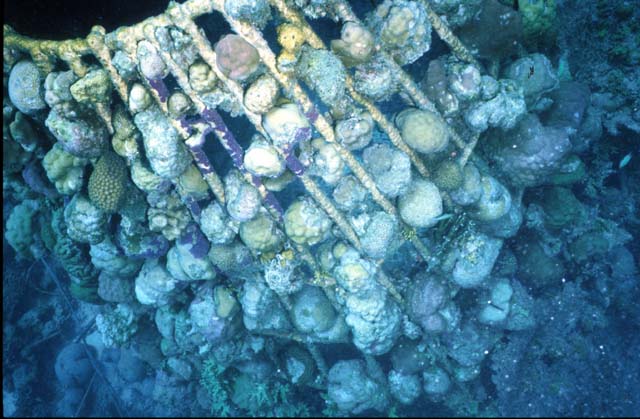
Ihuru Barnacle, Maldives. April 2 1999. The structure is covered with
healthy growing head corals which
survived the catastrophic 1998 bleaching that killed around 99% of
the corals in the surrounding reefs.
Image # 18 / 10
Image Name: Barnacle_6_Apr_1999jpeg_2.jpg
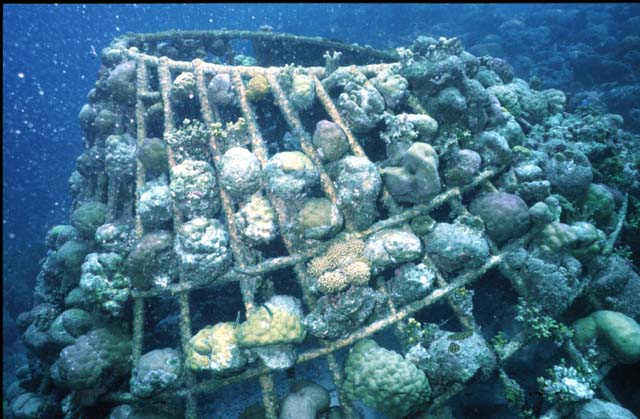
Ihuru Barnacle, Maldives. April 6 1999. The average size of these corals
is around 30 centimeters (one foot).
Image # 19 / 13
Image Name: Barnacle_Apr_1999_1jpeg_2.jpg
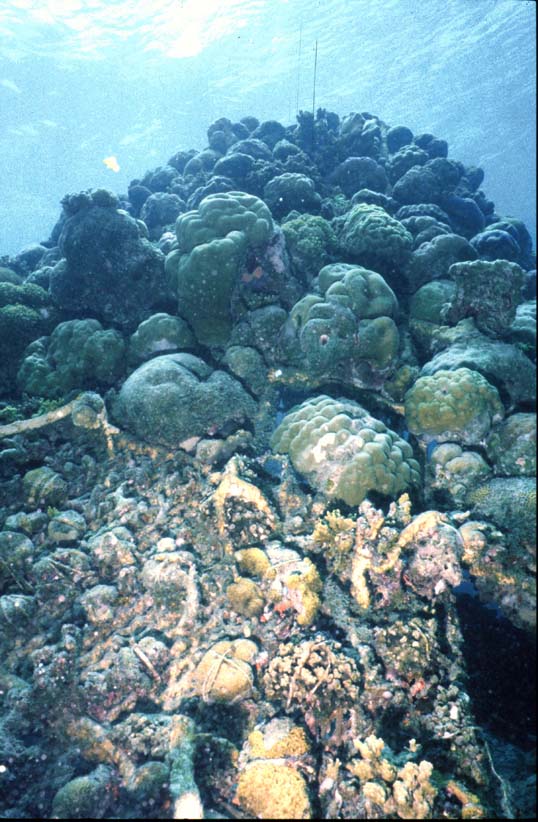
Ihuru Barnacle, Maldives, April, 1999. View of the outside of the structure
looking up to
the top. Corals cover the structure so densely that the underlying
framework is completely
concealed except for the mesh plate with smaller branching corals at
the bottom.
Image # 20 / 9
Image Name: Barnacle_5_April_99jpeg_1.jpg
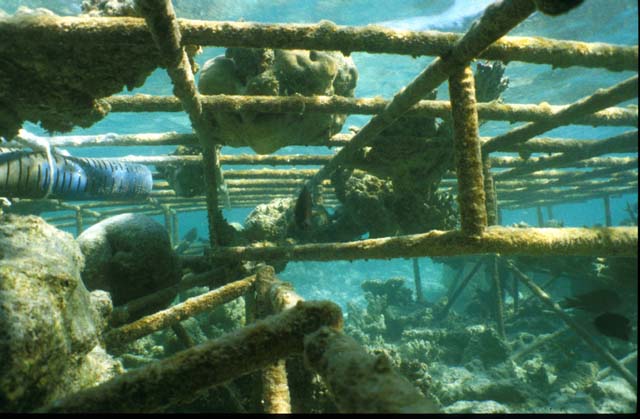
Ihuru Necklace, Maldives. April 5 1999. Interior view of growing breakwater
structure with embedded corals.
|